Lawmakers, privacy advocates push for reform of government surveillance rules
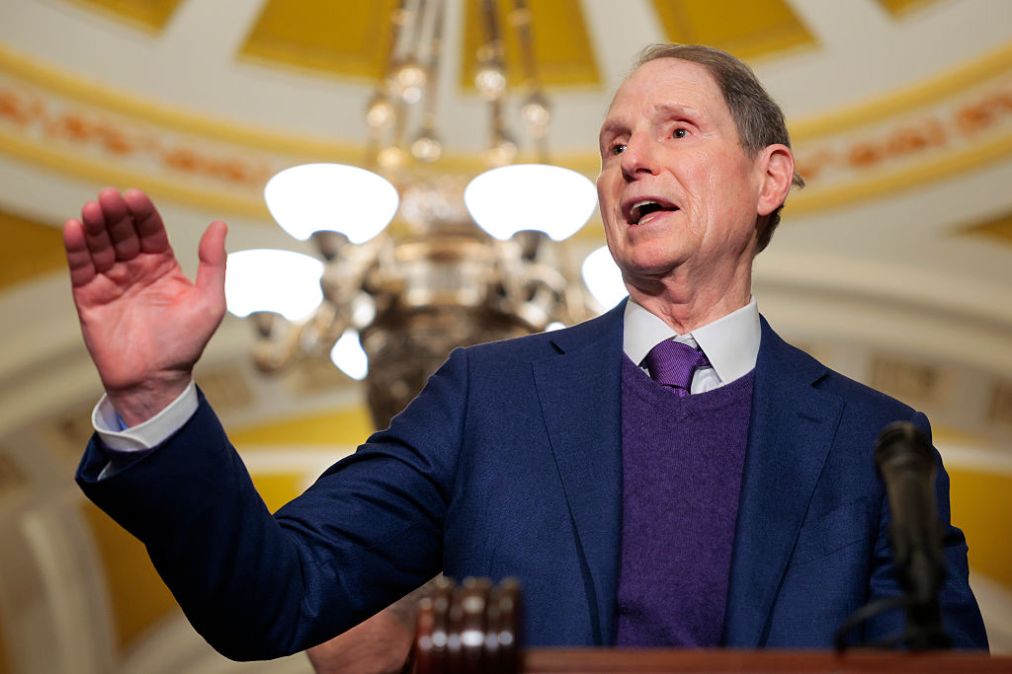
The federal government, and spy agencies in particular, would need to adhere to stricter guidelines when conducting surveillance under legislation introduced Wednesday by bipartisan groups in the House and Senate.
The Government Surveillance Transparency Act would require law enforcement to notify targets about subpoenas and court-ordered surveillance of their electronic data, establish a process for unsealing surveillance applications once it no longer disrupts an investigation and provide grants to state and Tribal courts to implement the bill’s provisions.
The bill was reintroduced by Sens. Ron Wyden, D-Ore., and Steve Daines, R-Mont., alongside Sens. Cory Booker, D-N.J., and Mike Lee, R-Utah. In the House, Reps. Ted Lieu, D-Calif., and Warren Davidson, R-Ohio, led the companion legislation.
“Law-abiding Americans deserve to know when and how their government tries to spy on them,” Wyden said in a press release. “This bill establishes a clear process to ensure the government can’t conduct surveillance operations in the dark by misusing sealing orders, with commonsense protections to make sure that active investigations aren’t compromised.”
The bill’s reintroduction comes just days after similar, transparency-focused legislation was proposed. Lee and Democratic Sen. Dick Durbin of Illinois introduced the Security and Freedom Enhancement Act to reauthorize a controversial statute under certain conditions, including the addition of more layers of internal supervision to increase accountability, privacy and oversight.
Both bills are attempts to close loopholes introduced by Section 702 of the Foreign Intelligence Surveillance Act, which allows spy agencies, such as the Federal Bureau of Investigation and Central Intelligence Agency, to bypass court authorization when conducting intelligence-gathering operations.
While the Section 702 clause says it’s aimed at surveilling foreign persons of interest located abroad, there have been incidents of improper collection of U.S. citizens’ communications.
“FISA 702 has been abused in shocking ways,” Jake Laperruque, deputy director of the Center for Democracy and Technology’s security and surveillance project, said in a statement. “With less than 10 weeks until FISA 702 expires, Congress should take up reform legislation quickly.”
Lawmakers are trying to close gaps in privacy protections rather than sunset the statute entirely.
“Section 702 is a valuable tool to help keep our nation safe,” Durbin said in a statement. “However, it’s being used to conduct thousands of warrantless searches of Americans’ private communications. That’s unacceptable.”
As the statute’s April 20 deadline approaches, President Donald Trump has begun to show his support for extending the existing authorities, Politico and NextGov reported this week. Some right-leaning lawmakers are pushing back. Lee characterized the reform he introduced this week as “imperative to restoring trust in our government’s commitment to the Constitution.” Sen. Rand Paul, R-Ky., also appeared to reject the reauthorization push in a post to X.
In testimony given by stakeholders during a December hearing to discuss the reauthorization, privacy advocates emphasized the need for further reform.
“If the government were using Section 702 solely to spy on hostile foreign actors, there would be little to debate in next year’s reauthorization,” Elizabeth Goitein, senior director of the Brennan Center for Justice’s Liberty and National Security program, said in prepared remarks. “The government conducted more than 13,000 known searches of Section 702 data in 2024 for the purpose of finding Americans’ communications and other personal information — though the FBI’s failure to track all of its searches means that the actual number may be much higher.”
Goitein, alongside Right on Crime Executive Director Brett Tolman, advocated for wider reassessment of intelligence-gathering operations and the agencies at the helm.
“You really can’t address Section 702 in isolation because Section 702 is part of a vast ecosystem of often overlapping surveillance authorities,” Goitein told lawmakers in December. “If you cut off one avenue of surveillance, the government might be able to turn to another or to exploit gaps in this network of laws to conduct surveillance without any statutory authorization.”