Bill backed by 160 Democrats seeks rebirth of IRS’s Direct File
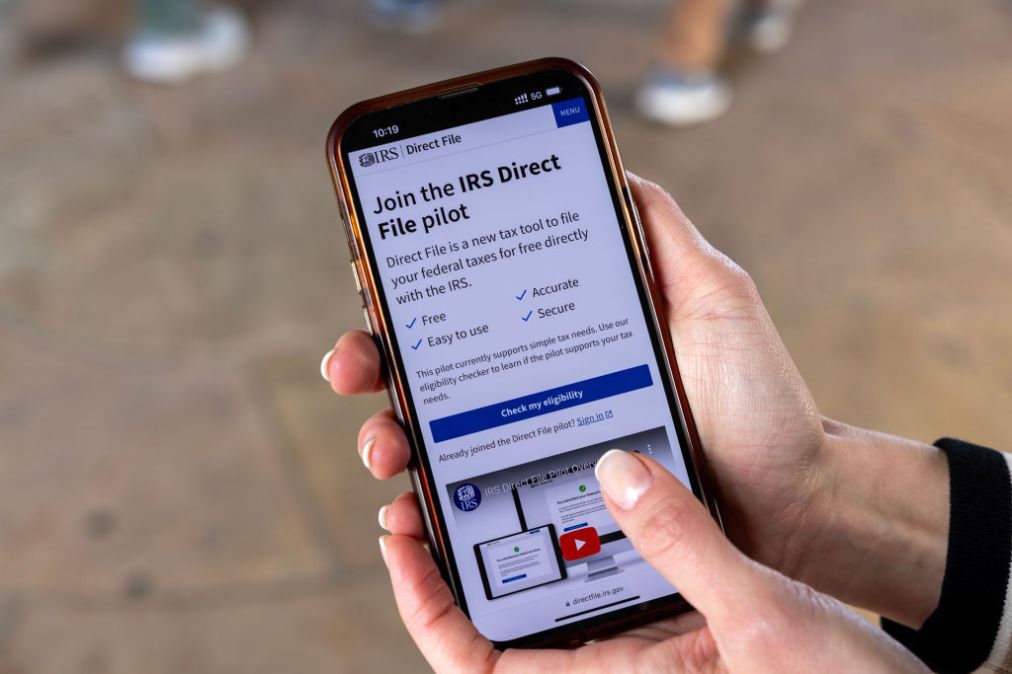
Congressional Democrats are hoping to revive the IRS’s free electronic filing tool, with 40 senators and 120 House lawmakers signing on to legislation that would reverse the Trump administration’s cancellation of Direct File.
The Direct File Act would make the popular filing product a permanent program, and then bar the Treasury secretary from undercutting the tool by suppressing access or conditioning use. It would also void existing agreements that restrict government tax preparation and filing services.
The bill is led by Sens. Elizabeth Warren of Massachusetts, Chris Coons of Delaware and Ron Wyden of Oregon, and Reps. Brad Sherman of California, Don Beyer of Virginia, Judy Chu of California, Steny Hoyer of Maryland and Mark Pocan of Wisconsin.
“It’s a no-brainer: Americans should be able to file their taxes easily and for free. Donald Trump canceled Direct File after giant tax prep companies spent millions lobbying to protect their profits,” Warren said in a press release. “We’re fighting to lower costs for families by bringing Direct File back and making it the law of the land.”
Added Sherman: “Americans shouldn’t have to waste valuable time or hard-earned money just to file their taxes. The Direct File Act expands on the successful 2024 pilot and offers a straightforward, no-cost filing option that will make the process simpler and more affordable for working families.”
The Direct File pilot launched for taxpayers in 12 states for the 2024 filing season. Shortly after the conclusion of that tax season, then-IRS Commissioner Danny Werfel announced that Direct File would be expanded in 2025 and made permanent.
For 2025, Direct File was available to users in 25 states, surviving misinformation from Elon Musk and legislative attacks from congressional Republicans. According to an IRS report obtained by the Center for Taxpayer Rights, 94% of taxpayers rated their experience with the tool as “excellent” or “above average.”
Nevertheless, the Trump White House scrapped Direct File after the 2025 filing season, leading much of the tech talent behind the tool’s creation to leave government and work from the outside on how to salvage it for a different administration.
“Trump and the Republicans shut down the IRS Direct File program because they’re bought and paid for by the tax software industry and don’t have a problem with middle-class taxpayers getting ripped off every spring,” said Wyden, ranking member of the Senate Finance Committee. “This bill is a promise that Democrats are going to restore Direct File the next time we’re in charge of the IRS, and in the meantime, it’s a shame that the Trump administration is a threat to any public service that saves Americans time, hassle and money.”
The bill would require the IRS to publish a yearly report on Direct File usage and how best to boost its accessibility. The legislation also calls on the agency to “enable seamless integration between state tax filing systems and Direct File” via a new grant program for states.
The press release touted endorsements from 115 unions, advocacy groups, and national organizations, plus supportive comments from Susan Harley, managing director of Public Citizen’s Congress Watch division, and Nina Olson, the former National Taxpayer Advocate.
“A free, direct e-filing tax return system is a fundamental taxpayer right,” said Olson, now the executive director of the Center for Taxpayer Rights. “Just as the government designs and printed paper tax forms for years, so should it design and maintain a user-friendly electronic filing option for individual taxpayers.”