Data experts see new Labor Department portal as ‘an important first step’
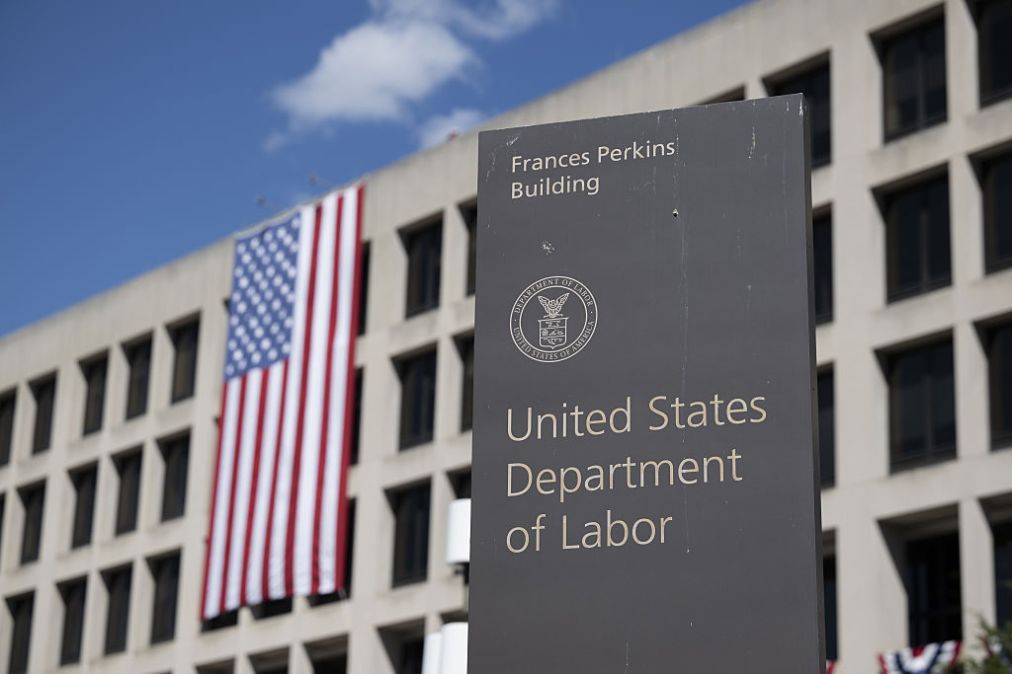
The Department of Labor believes its new open data portal — which brings together datasets on everything from unemployment insurance claims to county-level childcare prices — will be “a win for everyone.” Federal data experts see the tool as “an important first step.”
In announcing the launch of the portal last month, DOL put the finishing touches on a data project started during the first Trump administration and soft-launched in the final months of the Biden administration.
The public unveiling of the portal, which features a data visualization gallery and a modern API that allows users to make customized data requests, put the DOL in compliance with the 2019 OPEN Government Data Act and the federal data strategy. Labor Secretary Lori Chavez-DeRemer said in a press release that the new portal represented a “significant improvement” over a decommissioned data page that only hosted enforcement data from five agencies.
“This is a win for everyone — from data scientists and researchers to journalists and the general public — who want to understand our department’s work and enforcement actions,” Chavez-DeRemer added. “The new portal is a realization of our vision for truly open data at the department.”
Nick Hart, president and CEO of the nonprofit, nonpartisan Data Foundation, said in an interview with FedScoop that the Labor Department “should be applauded” for creating the portal and for “advancing open data efforts.” It’s the kind of product that chief data officers across the federal government should be pursuing.
“There’s a lot more to be said about the need for advancements around evaluation and the use of the data,” said Hart, an Office of Management and Budget alum. “But simply getting the data out there for people to use is an important first step, and every agency should be taking steps like this right now in government.”
At the Department of Labor, the portal work that continued through multiple administrations was made possible through a “collaborative effort” involving the Office of the Chief Data and Analytics Officer, the Office of the Chief Information Officer, and agency subcomponents, a DOL spokesperson told FedScoop in an email.
The enforcement data housed in the decommissioned data page — enforcedata.dol.gov — was transferred to the new portal, per the spokesperson, adding “availability of csv files along with the API” that serves up “open data to all users.”
“We want to provide data that is timely, accessible, machine-processable, and transparent,” the spokesperson said. “Over the next year, we hope to enhance the portal’s search capability, add more data sets, continue to ensure AI integration, and add more tools to help users interact with the data.”
Amy O’Hara, president of the Association of Public Data Users and a Georgetown University research professor, said in an interview with FedScoop that “sustained attention” to the portal will be crucial to its utility as a valuable public resource. Keeping the datasets updated and ensuring “good version control” are among the key factors in making the tool a long-term success.
“Fundamentally, this sort of open data, it’s as good as the restricted data underneath it,” said O’Hara, who previously served as a senior executive at the U.S. Census Bureau. “So it’s really important for data in those pipelines to be vetted, and that means that we need to have the feds in place that produce that data.”
Having the proper tech talent to handle the data isn’t a given, considering the federal government has shed more than 260,000 jobs since the beginning of the second Trump administration. Tracking changes to the federal workforce has been much easier to do since January, when the Office of Personnel Management launched a data portal of its own.
The introduction of OPM’s federal workforce database was “long overdue,” according to Hart, and “an incredible improvement” from the old Fedscope page.
“It’s a really good example of how OPM is making that data more accessible and useful to normal people,” he said. “And I think that’s a great example of where data transparency and basic data visualization tools can better serve not just government, but the American people.”
Regarding the OPM page, O’Hara said she’s “glad it’s there” — but it’s missing some critical datasets, like disability status. Still, the OPM page and DOL’s data portal stand in stark contrast to some earlier Trump administration efforts, including DOGE-launched sites — like its so-called wall of receipts — that “seem to be rather unplanned,” she added.
Going forward, O’Hara would like to see the level of transparency in the DOL and OPM datasets adopted across the public sector “as we are using government data more intensively.”
“It would be great if we had that transparency,” she continued, “because then I think it would allow people to have a deeper understanding of what government does and the importance of government data, and also to restore trust in government actions.”
For the Labor Department, some trust could be restored through a few key features built into the open data portal. The agency spokesperson said the data viz capabilities will provide the public with “building blocks to create data products for themselves that will help them understand and share information about the department’s work.”
The agency also plans to add features to help users “better use AI tools for finding and analyzing the DOL data,” according to the spokesperson, and has a long-term goal of making all of its data assets open and machine-readable by default, per Evidence Act requirements.
Both O’Hara and Hart believe Labor’s portal will need plenty of public input as the agency’s behind-the-scenes tech staffers work to add new datasets and other features to the page. Hart said he’ll be looking out for better and more visible “feedback mechanisms” that allow the public to weigh in on “what’s most valuable and what’s most useful” about the tool.
He’ll also be watching for the addition of existing government datasets; the portal launched with 42, he noted, but “it should be 400 datasets based on what the Department of Labor has — or even more than that.”
Collecting and managing data is an expensive effort, and the challenge inherent in that work won’t get easier in the years ahead, Hart said, pointing to “places where government data has been challenged as contracts have been changing and capacity has been changing.” Transparency experts should keep fighting the good fight for accessible government data, he said, and be vocal in highlighting positive efforts like the DOL initiative.
“This should be a continued dialogue across the public sector, the private sector and [with] the American people about what data we need and what data are the most valuable,” Hart said, “so that we can make sure that we deploy what will always be limited resources for what is most useful for society.”